That Half-Inch on the Label Is Not a Typo
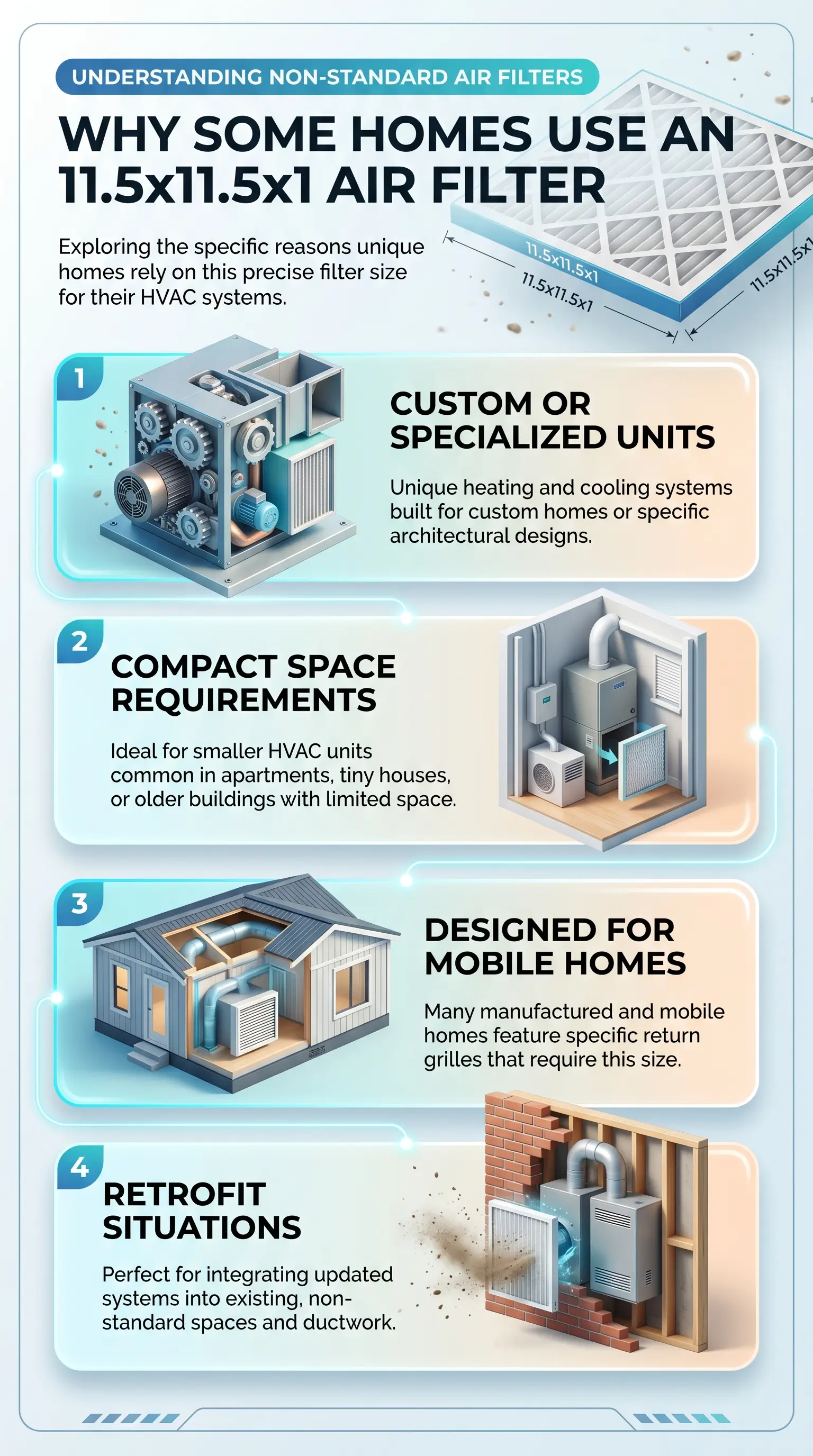
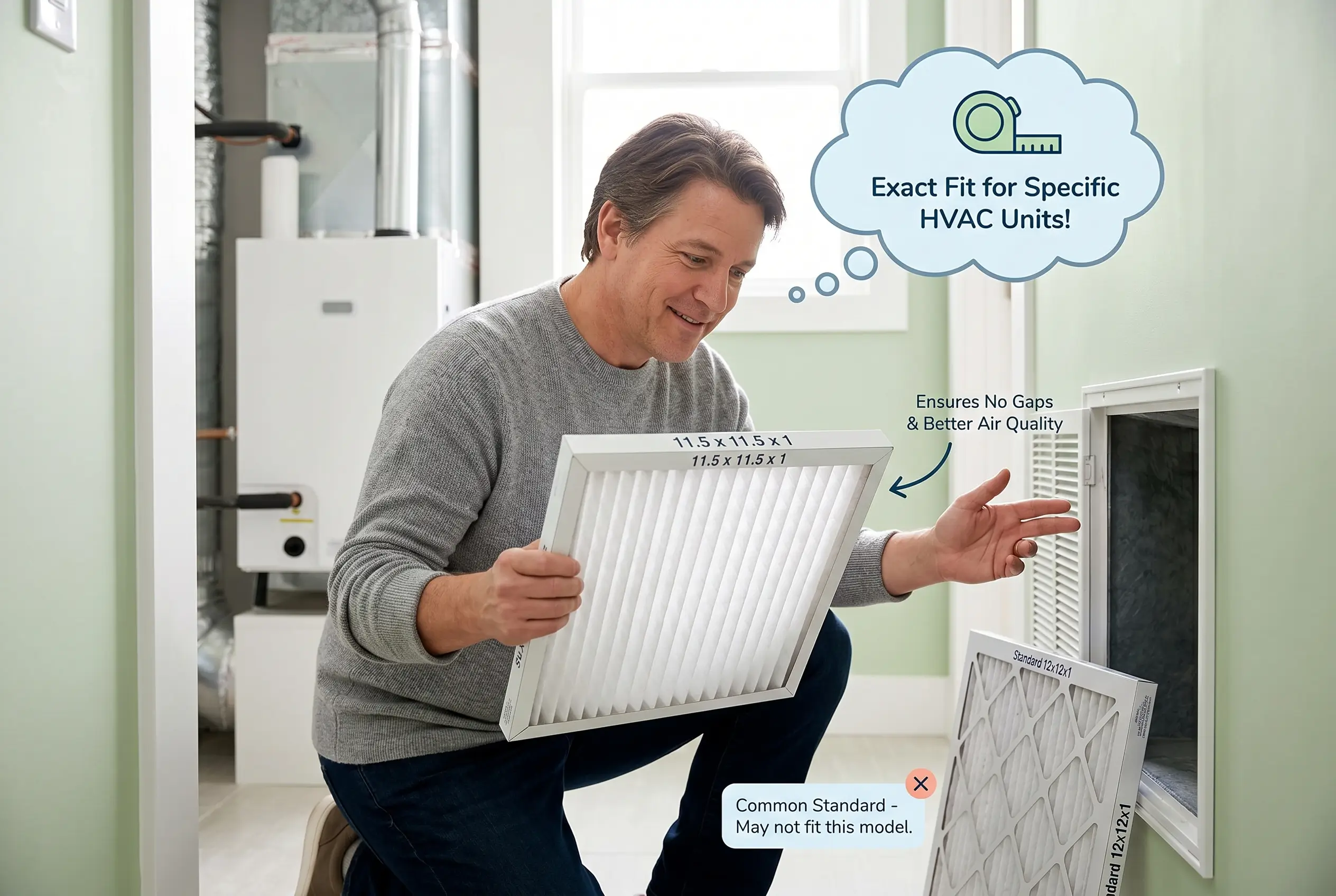
That half inch on your filter label is not a rounding mistake. When a filter reads 11.5x11.5x1, the printed number is the real measurement, right down to the slot it has to fill. I have pulled hundreds of these out of return vents, and the odd sizes almost always trace back to a deliberate choice someone made when the home or the system was built. options for unusual filter sizes turn out to be far more common than most homeowners expect.
Getting that size right matters more than the rating on the box. Choosing a properly sized 11.5x11.5x1 air filter is what decides whether your system actually cleans the air or just pushes it around the house. An air filter earns its keep by trapping dust, pollen, and the fine particles you cannot see as air passes through your heating and cooling system, which protects your lungs and the equipment at the same time.
TL;DR: Quick Answers
It is a real size, and that odd number is the exact measurement rather than a label rounded up for the shelf.
Homes get it from custom builds, older equipment, and later retrofits.
Measure your current filter and match the actual dimensions before you order or swap.
MERV 11 suits most homes. Higher ratings only make sense if your system can move air through them.
Change it about every 90 days, and keeping up with filter changes matters even more with pets or allergies.
Top Takeaways
The half inch in 11.5x11.5x1 is the exact width your slot needs. Nothing about it is arbitrary.
A filter that seals the opening does its real job of capturing more airborne particles instead of letting air sneak past.
A loose or forced fit sends dust onto the coil and blower, which wears on how your whole system moves air.
Size first, rating second. Confirm the dimensions before you pick a MERV level.
For most homes, a well-built pleated filter at a moderate rating beats the highest number on the shelf.
Where Nonstandard Filter Sizes Come From
Odd sizes are common, and they are almost always on purpose. The decision usually happened long before you bought a filter, and it tends to come down to a handful of familiar situations.
Custom and regional builds: the installer sizes the return opening to the equipment and the wall cavity, not to whatever filter is easiest to grab at the hardware store.
Older or manufacturer-specific equipment: some furnaces and air handlers were built around their own filter racks, which do not line up with today's common sizes.
Retrofits and additions: when a system gets swapped during a professional system installation or a room gets added on, the old return grille often stays exactly as it was.
Nominal Size Versus Actual Size
Here is where the confusion clears up. A filter labeled 12x12x1 usually measures about 11.5 by 11.5 inches once you hold a tape measure to it, because the printed size gets rounded for the shelf. The 11.5x11.5x1 label skips that rounding and gives you the true width straight out. So the odd number is the honest one. When you are not sure what you are dealing with, a filter size calculator takes the guesswork out of matching the printed size to the real opening.
What Happens When the Fit Is Wrong
Air finds the easiest way through. Force a too-small or rounded filter into an opening it was never cut for, and you leave gaps around the frame where a steady stream of air slips by completely unfiltered. That bypass air drops dust straight onto the evaporator coil and the blower, where it piles up, drags down efficiency, and shortens the life of the system. A filter that runs too big and gets bent or trimmed buckles in the rack and opens the same gaps. Matching the actual opening closes them, and sealing leaks in your ductwork keeps the filtered air from leaking out before it reaches your rooms.
Matching the Rating to Your Home
Size settled, the rating is your next call. MERV 8 covers everyday dust and pollen, MERV 11 steps up to pet dander and finer allergens, and MERV 13 catches the smallest common particles. Higher is not automatically better. A rating your system cannot pull air through will choke airflow and make the equipment work harder for less. MERV 11 sits in the sweet spot for most homes. If you are still weighing it, choosing the right pleated filter for your setup comes down to balancing capture against airflow, and an everyday dust-and-pollen filter handles a home without pets or allergies just fine.
“The biggest mistake I see is people chasing a higher rating while ignoring whether the filter seals the opening. A snug, correctly sized filter at a moderate rating cleans more air than a high-rated filter that lets air slip around the edges.”
Seven Trusted Resources for Getting Filter Size and Rating Right
When people want to double-check sizing, replacement timing, or air-quality basics from a source that is not trying to sell them a filter, these are the seven I send them to.
ENERGY STAR guide to heating and cooling efficiency: practical advice on checking your filter monthly and changing it at least every three months to protect airflow.
U.S. Department of Energy air conditioner maintenance guide: shows how a clogged or poorly fitted filter cuts airflow and lets dirt reach the coil.
American Lung Association asthma trends overview: current data on how widespread asthma is and why indoor air quality matters at home.
Mayo Clinic guidance on allergy-proofing your home: recommends cleaning or replacing small-particle filters in heating and cooling systems regularly.
Allergy and Asthma Network filtration explainer: a straight look at what household and HVAC filtration can and cannot do for allergy sufferers.
Consumer Product Safety Commission home air guidance: federal guidance on changing system filters and keeping biological pollutants out of your air.
EWG healthy home guide to air filters: a plain-spoken walkthrough of choosing and maintaining filters for a healthier home.
Three Numbers That Explain Why the Right Filter Matters
A few numbers put the stakes in plain terms, and each one comes from a primary source you can open and read yourself.
Indoor air can carry pollutant levels two to five times higher than outdoor air, according to the EPA indoor air quality guide. A filter that fits is one of the simplest ways to lower that daily exposure.
Nearly 90% of U.S. households use air conditioning, based on U.S. Energy Information Administration data. That is a lot of systems whose performance rides on a filter that actually fits.
More than 26 million Americans currently live with asthma, per CDC asthma data. In those homes, catching fine particles with the right filter is not a small detail.
Final Thoughts: The Exact Fit Beats the Round Number
After years of pulling filters out of return vents, I will say it plainly. Getting the exact size right does more for your air than chasing the highest rating on the shelf. A filter that fills its opening cleanly quietly outperforms a premium one that leaves room for air to slip around the frame. If cooking or pets fill your house with strong smells, filters that cut household odors are worth a look, and for anyone with real sensitivities, extra air-cleaning support pairs well with a filter that fits. Treat that odd 11.5-inch measurement as a feature, not an annoyance. It points you straight at the fit your system was built for.
Frequently Asked Questions
Is 11.5x11.5x1 a real, standard filter size?
Yes. Major manufacturers carry it. It looks strange only because the label shows the near-exact measurement instead of a rounded number.
Can I use a 12x12x1 filter instead?
Often the actual sizes land close, since plenty of 12x12x1 filters measure about 11.5 by 11.5 inches once you check them. Measure your current filter and match the real dimensions before you substitute, because a loose fit lets air bypass the media.
Why does my home have this odd size?
Usually because someone built the return opening to fit a specific system or wall cavity. Custom builds, older equipment, and later retrofits all tend to leave nonstandard openings behind.
What MERV rating should I choose for an 11.5x11.5x1 filter?
MERV 11 balances capture and airflow for most homes. MERV 8 handles basic dust and pollen, and MERV 13 grabs finer particles as long as your system can take the added resistance. A technician handling your routine system upkeep can tell you the highest rating your system supports.
How often should I replace it?
Every 90 days is the common guideline, and closer to every 30 to 60 days with pets, allergies, or heavy use. A longer-lasting filter option with more depth can stretch that interval in some systems.
Does a higher MERV always mean cleaner air?
Not by itself. A rating too high for your system restricts airflow and drags down performance. If the airflow feels weaker after a switch, professional repair help can confirm whether your system suits that rating.
Measure Twice, Then Order With Confidence
Pull your current filter, read the printed size, and confirm it against a tape measure before you reorder. Once you know the exact dimensions and the rating your system handles well, the right filter is an easy call and cleaner air follows.
Learn more about HVAC Care from one of our HVAC solutions branches…
Filterbuy HVAC Solutions - Miami FL - Air Conditioning Service
1300 S Miami Ave Apt 4806 Miami FL 33130
(305) 306-5027
https://maps.app.goo.gl/Ci1vrL596LhvXKU79